
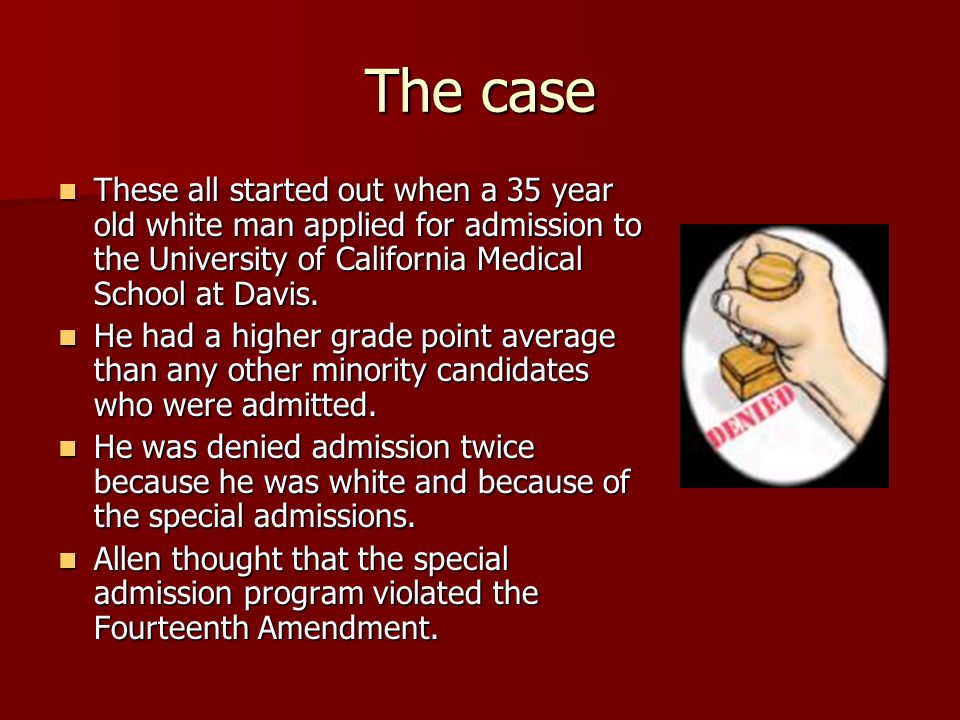
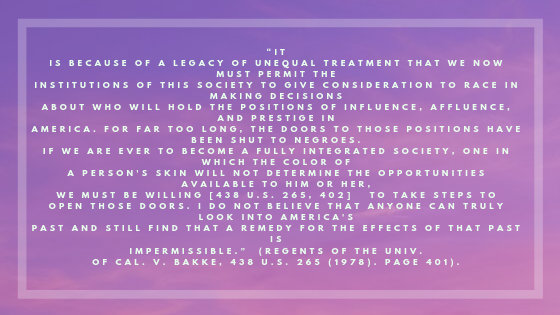
This argument relies on the futuristic projection of a world in which “the color of a person’s skin will not determine the opportunities available to him or her…” but it also acknowledges that recourse is needed before such a reality can become plausible. This opinion’s acknowledgement of the past- and of the limited impact recourse (up until that point) had had- indicates the work that must be done, in this case, to promote access and reject the perpetuation of inequity that Bakke’s stake proposes. This statement refuses to state that the impact of racist legacies and histories has come to an end and that the policies set forth by UC Davis are in fact, harming. This opinion also negates the narrow view of impact that the previous example relied upon, by exemplifying the broad and widespread implications that segregation and racism have had on people of color in this country. The responsibility is placed on the court to support affirmative action and provide the legal support to disenfranchised community, so the reliance of skin color in admissions policies, for example, might no longer be needed. The equal protections clause, in comparison to the opinion above, is viewed as a vehicle through which equity is made plausible- not a limiting notion that refuses to acknowledge impact of history.
 ENGL1760Z Final Project: Law, Literature, and Managing Difference